
A count of new messages tells you when inquiries arrived. It does not tell you whether anyone answered the question, owned the next step, or recorded what happened after a consultation was offered.
A short inquiry audit follows a small, consistently selected set of records from first contact to appointment outcome. It can reveal where a handoff needs attention. A small sample may be too imprecise to estimate your clinic's true conversion rate, and it cannot establish an industry benchmark.
Choose a fair sample
Choose a recent period, such as the last 30 days, and decide what counts before opening the records. You could cap the first review at 20 inquiries. If you sample, select records in a consistent order and write down the rule. Include open inquiries and mark them pending; do not choose only records with a clear outcome.
Include new inquiries about the clinic's services. Exclude test submissions, spam, and duplicate copies, and record how many you excluded. Keep a neutral record ID, channel, and timestamps. Patient photos and medical details are not needed to audit a handoff.
Before sampling, write down what counts as in scope and administratively qualified. Do not use medical suitability as an audit criterion; that is for the clinic's qualified clinician.
Follow one record through the handoffs
Check the same five points for every inquiry. Record qualification only against the clinic's administrative criteria and evidence. Clinical suitability belongs to a qualified clinician.
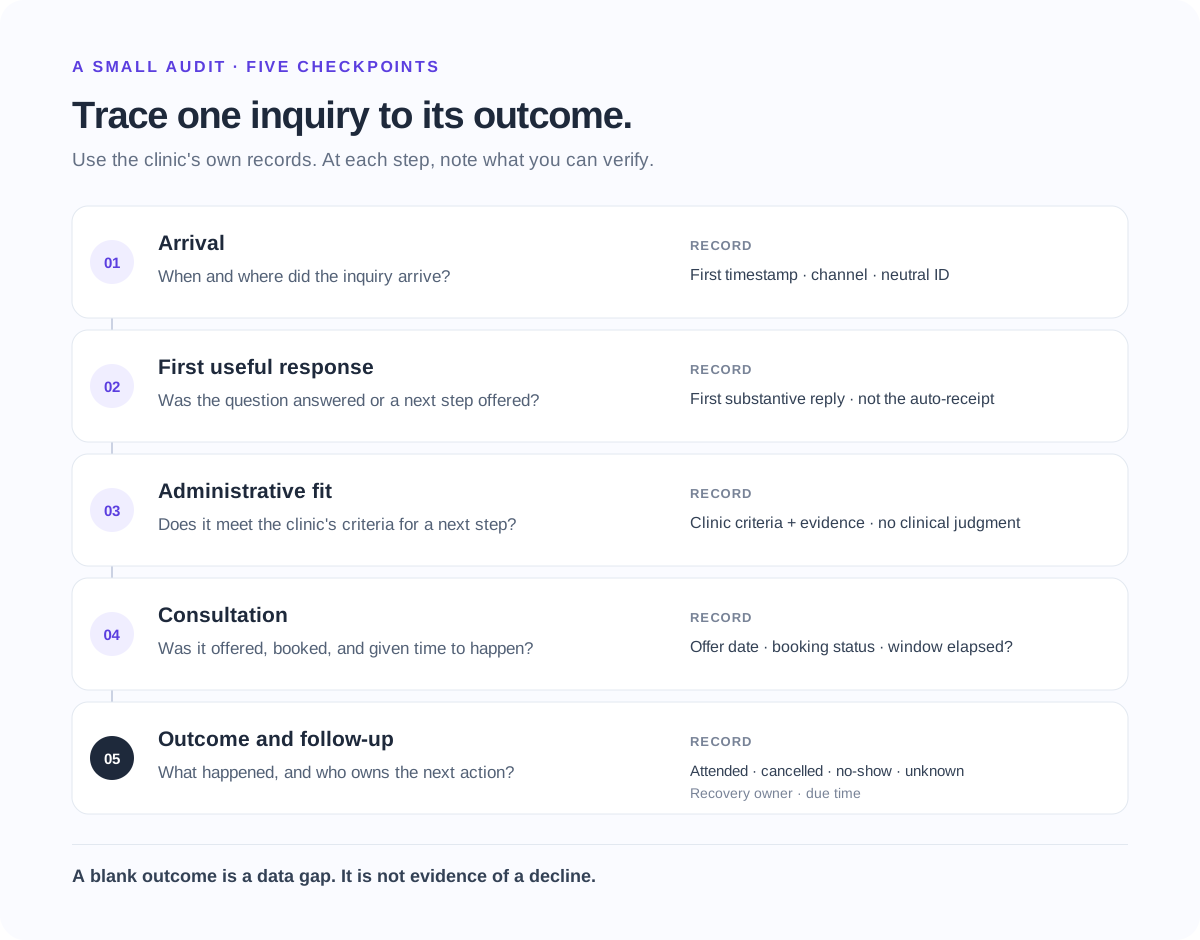
When one person contacts the clinic on two channels, link the records only if the clinic can confidently identify them as the same person. If qualification or an outcome is unknown, keep it unknown; do not fill the gap by guessing.
Mark the first useful response
An automatic receipt proves the message arrived. It does not show that the person's question was answered or that they know what to do next. Start the response-time clock at the first substantive answer or useful next step, and keep the automatic receipt separate.
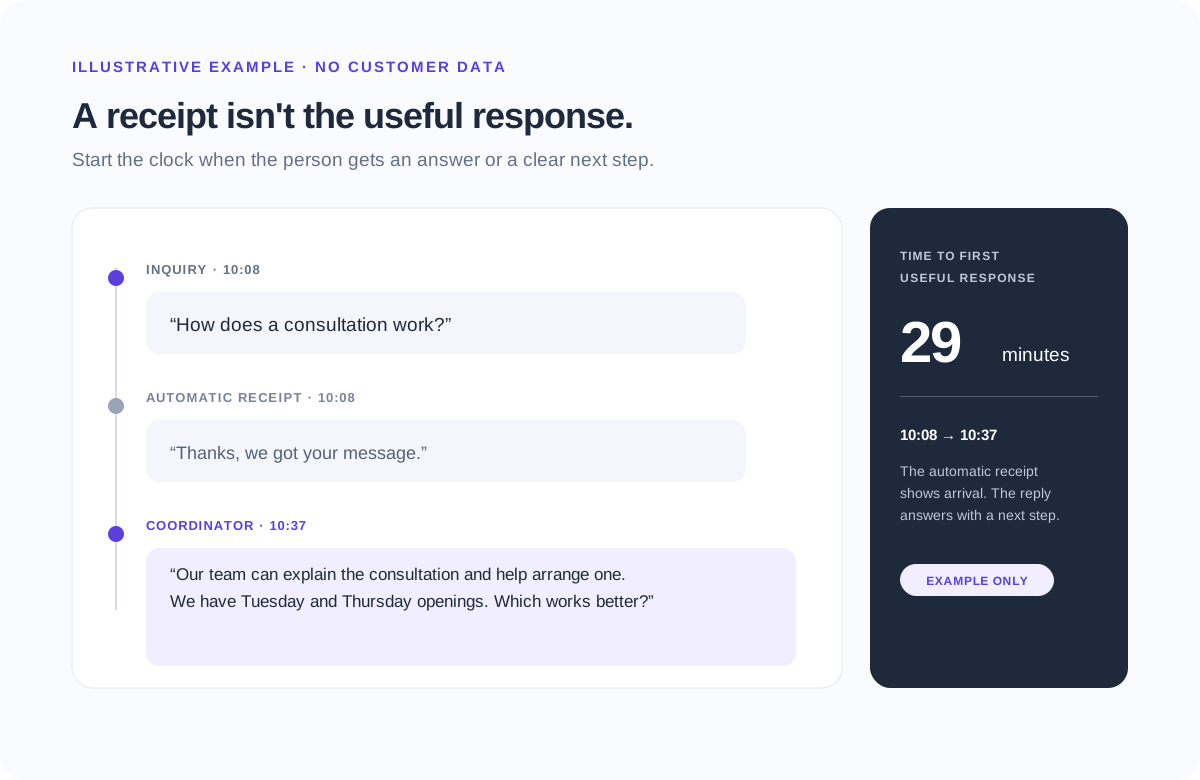
The example is administrative. It does not answer a medical question or recommend treatment.
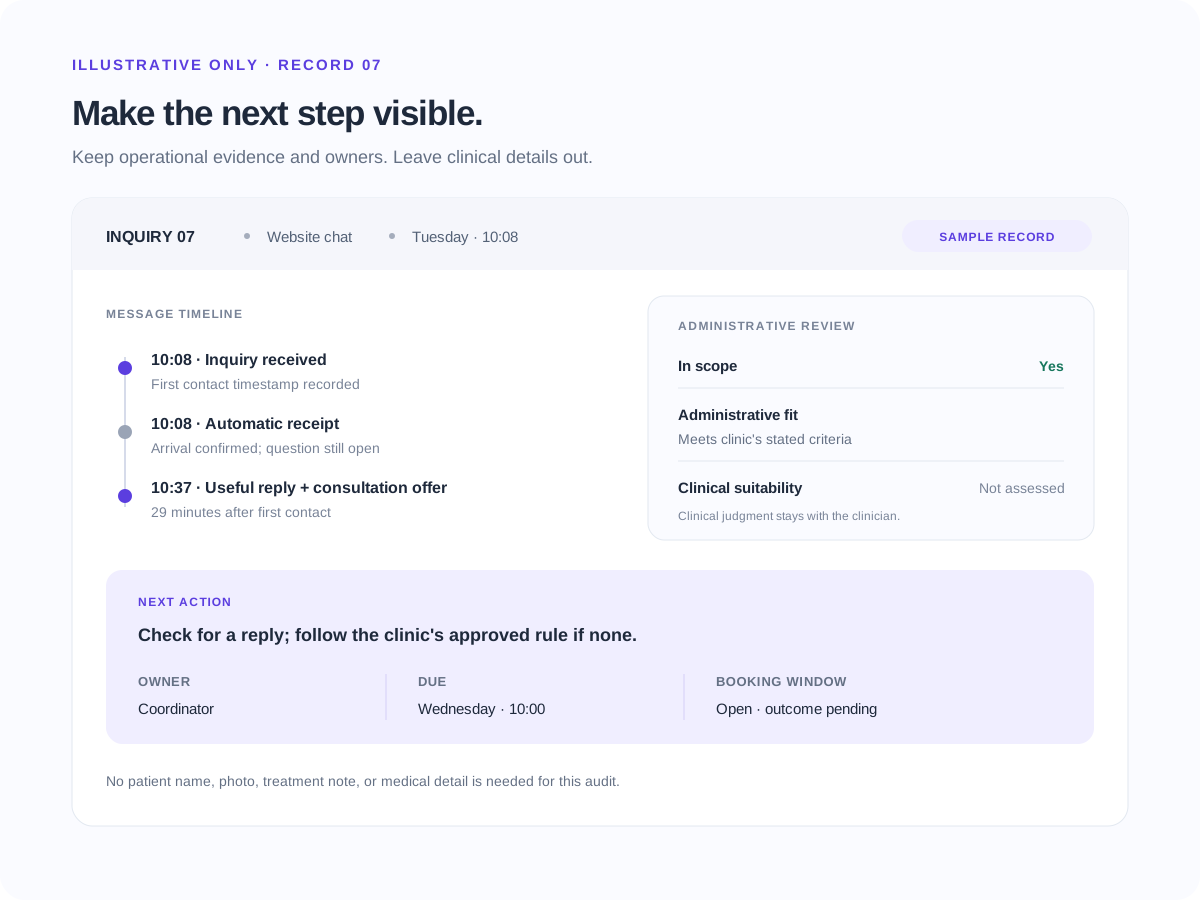
Keep the audit record light
Use a neutral ID to connect the timestamps, administrative status, and next action. A short record is enough to see who owns the follow-up and when it is due. The example below is the same fictional inquiry; its booking window is still open, so its outcome remains pending.
Calculate a few rates
Choose the follow-up window before reviewing records. For example, count a consultation offer in the booking rate only after its seven-day window has ended. This avoids treating recent, still-open offers as missed bookings.
- First useful response coverage = in-scope inquiries with a first useful response ÷ all in-scope inquiries.
- Owned next-step coverage = inquiries with an action, owner, and due time recorded ÷ all in-scope inquiries.
- Consultation-offer rate = administratively qualified inquiries offered a consultation ÷ inquiries with recorded administrative qualification.
- Booking within the window = offers booked before the chosen window ended ÷ offers whose full window has elapsed.
- Attendance rate = consultations attended ÷ booked consultations whose appointment time has passed.
- Follow-up coverage = eligible stalled or no-show inquiries with a documented follow-up ÷ all eligible stalled or no-show inquiries.
Report the median time to first useful response, then split it by the clinic's open and closed hours. Keep “unknown” separate from “no.” An unrecorded outcome is a data gap, not proof that someone declined. Compare groups only when they use the same definitions and selection rule.
Read a ten-inquiry example
These fictional records show how to interpret a small audit. They are not clinic benchmarks. Six consultations were offered; two offers were still inside their seven-day window, so they are left out of the booking denominator.
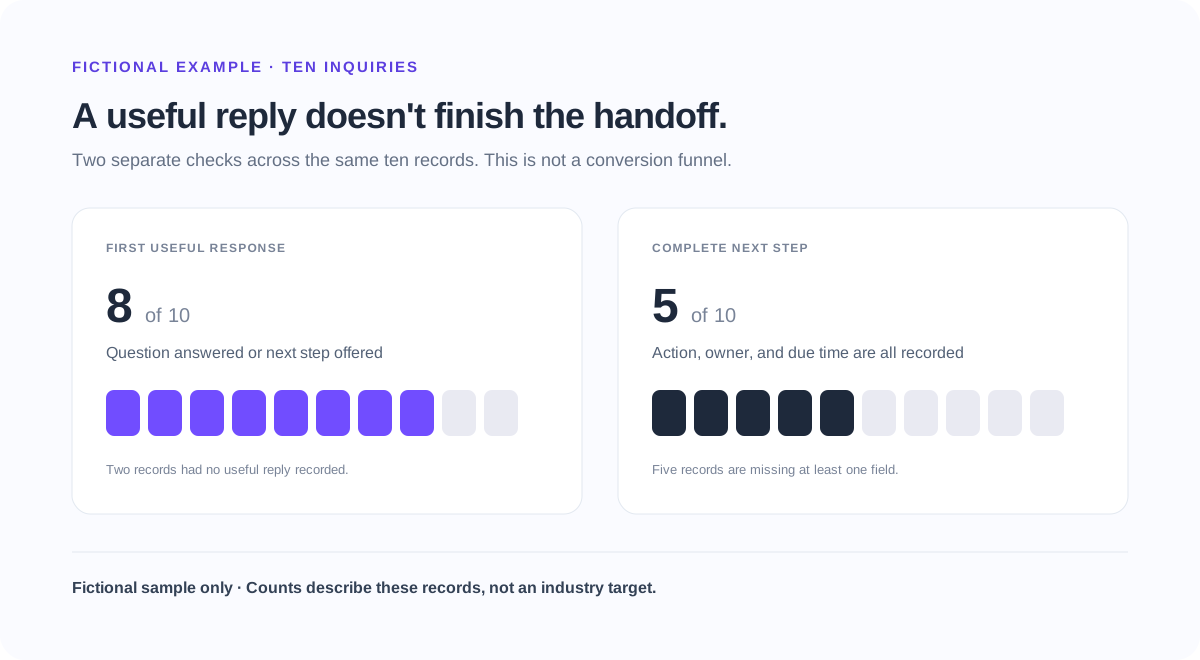
The next three measures follow later stages in the example.
| Measure | Example result | What the records show |
|---|---|---|
| Consultation offered among administratively qualified inquiries | 6 of 7 | One qualified record has no offer recorded. |
| Booked within seven days of an offer | 2 of 4 | Two offers had no booking recorded by the end of the window; that alone does not establish a decline. |
| Outcome recorded for appointments already due | 2 of 2 | One was attended and one was a no-show. |
The clearest gap in this sample is the next-step handoff. A clinic could test requiring an action, named owner, and due time before an inquiry leaves the active queue, then repeat the audit using the same selection rule.
Find the first broken handoff
Read the records that stopped progressing. Look for the earliest point where ownership or evidence disappears: an unanswered message, an unassigned follow-up, an offer with no booking status, or an appointment with no recorded outcome.
Group gaps by channel, day, and open versus closed hours only when each group has enough records to be useful. For small groups, review the examples and gather more evidence before ranking channels or staff.
Fix one thing, then repeat the audit
Choose a gap the clinic can control. If several records lack an owner, try assigning a named owner and due time before a conversation leaves the active queue. Treat this as a hypothesis: the next audit can show whether handoff records changed; booking results need their own comparison.
Keep the selection rule and definitions the same. After the team has used the change, review a comparable set of inquiries and record what improved, what did not, and what remains unknown. A small before-and-after check can guide the next experiment; it does not establish causation by itself.
Keep clinical boundaries explicit. Staff and automation can organize approved administrative follow-up. Clinical assessment, treatment recommendations, and exceptions belong with the clinic's qualified team.